

Rosacea is a common chronic skin condition that can cause facial redness, flushing, visible blood vessels, bumps, breakouts, and skin sensitivity. While rosacea can look different from person to person, it often affects the central face, including the cheeks, nose, chin, and forehead.
For patients in Pickering, Ajax, Whitby, Oshawa, and the surrounding Durham Region, rosacea can be frustrating because symptoms may come and go, flare unexpectedly, or be mistaken for acne, irritation, or sensitive skin.
At Elevate Dermatology in Pickering, our board-certified dermatologists can assess persistent redness, bumps and sensitivity as a medical concern. We also offer XEO+ laser and light options, so you can discuss the role of a cosmetic procedure alongside treatment for the underlying rosacea.
What Is Rosacea?
Rosacea is a long-term inflammatory skin condition that most commonly affects the face. It can cause persistent redness, flushing, bumps, visible blood vessels, and increased skin sensitivity.
Rosacea is not simply “red skin.” It is a chronic medical skin condition that can affect the skin in several different ways and may require ongoing management.
Common rosacea symptoms include:
- Facial redness
- Flushing or blushing
- Visible blood vessels
- Acne-like bumps
- Burning or stinging
- Dry or sensitive skin
- Skin thickening in some cases
- Eye irritation in some patients
Because rosacea can overlap with acne, eczema, allergic reactions, or general skin sensitivity, a proper dermatology assessment can help confirm the diagnosis.
Real Rosacea Treatment Results
Rosacea is not just redness. It is a chronic inflammatory condition that can flare, persist, and affect overall skin health if left untreated.
At Elevate Dermatology, treatment planning considers the type of redness, visible vessels, inflammation, sensitivity and your individual skin concerns.
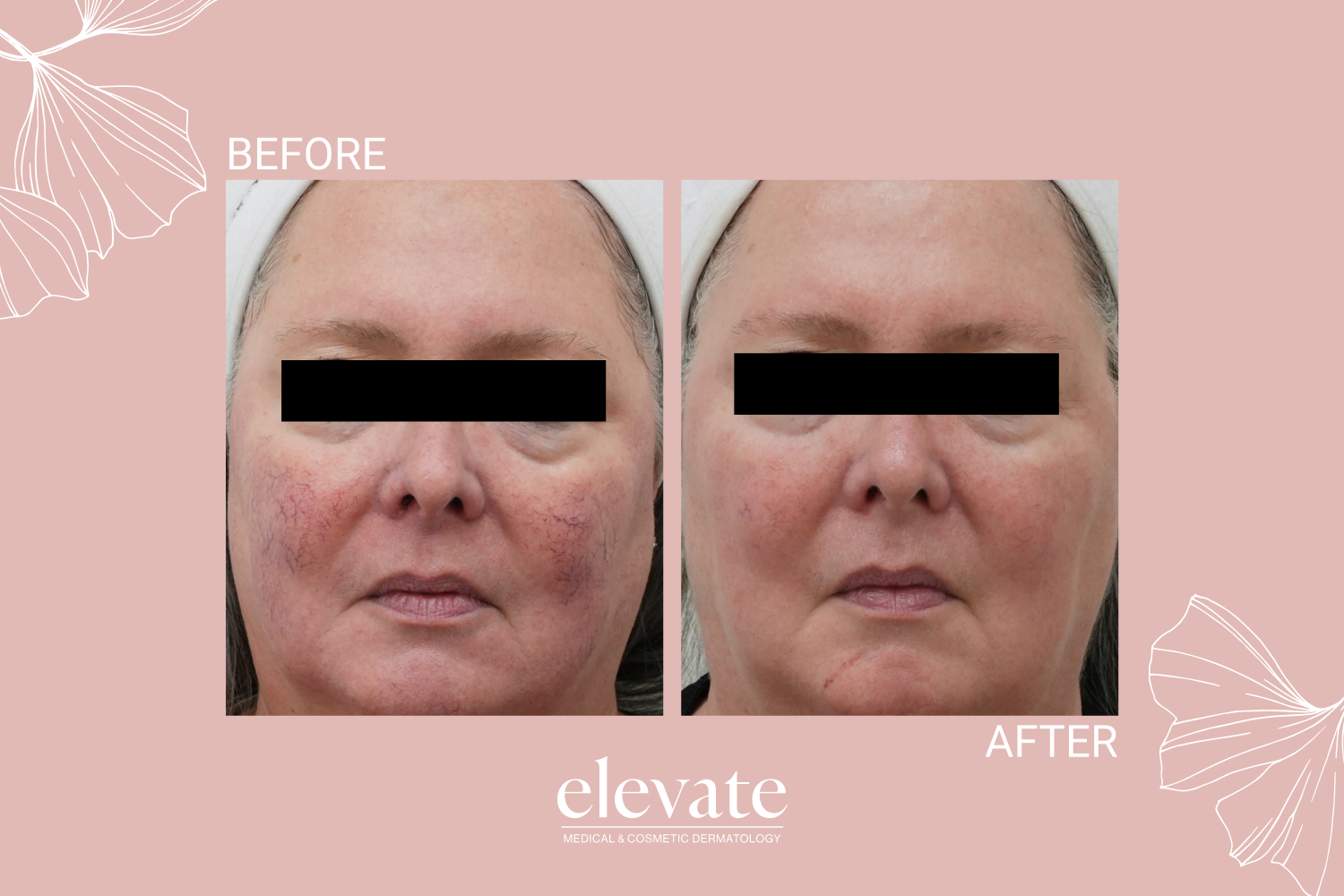
This patient underwent a series of 2D treatments combining Laser Genesis and IPL, with a total of 4 sessions.
The goal was to:
- Reduce persistent redness
- Target visible vessels
- Improve overall skin tone and texture
- Calm visible inflammation
- Support clearer, more even-looking skin
Following the treatment series, the photographs show a visible reduction in redness and a more even-looking skin tone.
If you are dealing with ongoing redness, flushing, or sensitivity, it is worth getting a proper assessment and building a treatment plan that addresses the underlying pattern of your rosacea rather than just covering the redness temporarily.
What Causes Rosacea?
The exact cause of rosacea is not fully understood, but it is believed to involve a combination of inflammation, blood vessel sensitivity, immune system activity, genetics, and environmental triggers.
Many patients notice that rosacea flare-ups are triggered by specific factors.
Common rosacea triggers may include:
- Sun exposure
- Heat
- Cold wind
- Spicy foods
- Alcohol
- Hot drinks
- Stress
- Exercise
- Harsh skin care products
- Fragrance
- Certain medications
- Sudden temperature changes
Not every patient has the same triggers. Our summer rosacea guide explores practical ways to identify and manage triggers such as heat, sun exposure and exercise.
Types of Rosacea
Rosacea can appear in different ways. Some patients mainly experience redness and flushing, while others develop bumps, pustules, or eye symptoms.
Common rosacea patterns include:
- Redness and flushing
- Bumps and acne-like breakouts
- Visible blood vessels
- Thickened skin texture
- Eye-related irritation
Some patients may experience more than one type at the same time.
Rosacea vs Acne
Rosacea is often mistaken for acne because it can cause bumps and breakouts. However, rosacea and acne are different conditions.
Acne often involves clogged pores, blackheads, whiteheads, and oil-related breakouts. Rosacea is more closely associated with inflammation, redness, flushing, sensitivity, and visible blood vessels.
This distinction matters because acne products can sometimes irritate rosacea-prone skin and make redness worse.
How Is Rosacea Treated?
Rosacea treatment depends on the type and severity of symptoms.
Treatment may include:
- Prescription topical creams or gels
- Oral medications
- Laser or light-based treatments
- Skin care adjustments
- Trigger management
- Sun protection
- Medical-grade skin care
- Ongoing maintenance treatments
Rosacea is a chronic condition, so treatment generally focuses on managing symptoms and reducing the frequency or severity of flares.
Laser Treatments for Rosacea Redness
For selected patients with persistent redness or visible blood vessels, laser or light-based treatments may have a role in the treatment plan.
At Elevate Dermatology, XEO+ includes Laser Genesis and IPL options that may be considered depending on the type of redness being assessed.
These treatments may help target vascular redness and improve the appearance of broken capillaries or diffuse facial redness.
Patients with rosacea may benefit from a combined approach that includes medical management, skin-care changes, sun protection and in-office treatments when appropriate.
Skin Care Tips for Rosacea-Prone Skin
Skin care is an important part of rosacea management. Many patients with rosacea have a sensitive skin barrier, which means harsh products can make symptoms worse.
Helpful skin care habits may include:
- Using a gentle cleanser
- Avoiding fragrance
- Avoiding harsh scrubs
- Wearing daily sunscreen
- Using a simple moisturizer
- Introducing active ingredients carefully
- Avoiding over-exfoliation
- Choosing products designed for sensitive skin
Bring the products you use to our team, particularly anything that repeatedly stings. Our dermatologists can assess whether rosacea or another condition is contributing; Paulina can also help discuss your cosmetic skin-care goals within her role. A long product list is not a prerequisite for getting help.
When Should You See a Dermatologist for Rosacea?
You should consider seeing a dermatologist if you experience:
- Persistent facial redness
- Frequent flushing
- Bumps that do not respond to acne treatment
- Burning or stinging skin
- Visible blood vessels
- Worsening sensitivity
- Eye irritation
- Redness that affects your confidence
A dermatology assessment can help clarify the diagnosis and determine whether medical treatment, skin-care changes or other options should be considered.
Rosacea Treatment in Pickering and Durham Region
Patients from Pickering, Ajax, Whitby, Oshawa, Brooklin, Courtice, Bowmanville, Scarborough, and nearby communities often seek dermatology care when redness, sensitivity, or flare-ups begin interfering with daily life.
Our team approach means that facial redness can be discussed medically before you decide whether to pursue a cosmetic treatment. Our dermatologists can help distinguish concerns such as inflammatory bumps, persistent colour and visible vessels, which may call for different parts of a plan.
At Elevate Dermatology, the options you can discuss include prescription care with our dermatologists and XEO+ treatments when appropriate. Tell us whether your priority is discomfort, unpredictable flares or the appearance of persistent redness; that distinction helps make the discussion useful.
Bring your rosacea questions to Elevate Dermatology
You do not have to arrive during your worst flare for the history to matter. Bring photographs if symptoms come and go, your current products and a note of what seems to trigger discomfort. Our summer rosacea guide can help you organise those observations.
Contact our team to ask about a medical assessment in Pickering. Tell our team explicitly if your eyes are affected, and seek prompt medical advice for eye symptoms rather than treating them as a cosmetic redness concern.